
DOLE Minimum Wage Table 2026
Daily private-sector minimum wages across the Philippines—regional rates, agriculture and small-establishment rules, effective dates, and announced increases shown separately.
Updated on Oct 20, 2026 · Rates effective as of Oct 20, 2026
Fact Checked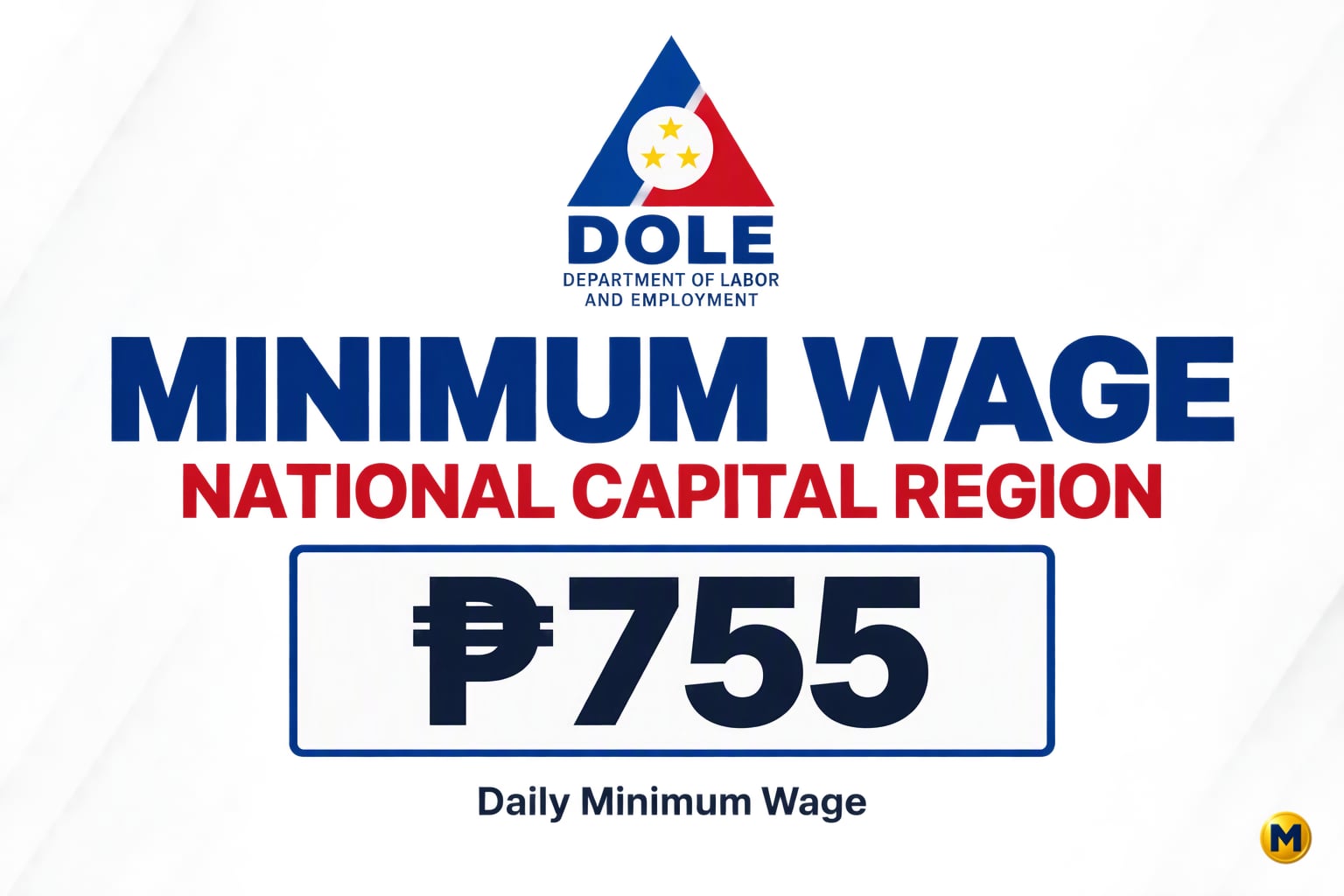
Quick answer
There is no single national minimum wage. As of Oct 20, 2026, Metro Manila’s daily rate is ₱755 for non-agriculture and ₱718 for agriculture and specified small establishments. Your correct rate depends on workplace location, industry, establishment size and the effective wage-order tranche—not the highest rate in your region.
Daily minimum wage by region
Philippine pesos per normal eight-hour workday · Currently effective rates, Oct 20, 2026
| Region / coverage | Non-agriculture | Agriculture | Wage order / latest tranche | Category notes |
|---|---|---|---|---|
| NCR · Metro Manila | ₱755 | ₱718 | NCR-28 Sep 26, 2026 | ₱718 also applies to retail/service with ≤15 workers and manufacturing with <10 workers. |
| CAR · Cordillera | ₱505 | ₱505 | CAR-24 Dec 30, 2025 | Uniform daily rate for covered sectors. |
| I · Ilocos | ₱480–505 | ₱480 | RB 1-24 Nov 19, 2025 | Non-agriculture: ₱505 for ≥10 workers; ₱480 for <10 workers. |
| II · Cagayan Valley | ₱500 | ₱500 | RTWPB 2-24 Nov 5, 2025 | Uniform daily rate for covered sectors. |
| III · Central Luzon | ₱560–600 | ₱545–570 | RBIII-26 Apr 16, 2026 | Aurora: ₱560 / ₱545; other provinces: ₱600 / ₱570. Retail/service: ₱515 in Aurora, ₱590 elsewhere. |
| IV-A · CALABARZON | ₱525–600 | ₱508–525 | IVA-22 Apr 1, 2026 | Varies by locality and category. Small retail/service with ≤10 workers: ₱508. New order starts Oct 26; see below. |
| IV-B · MIMAROPA | ₱455 | ₱455 | RB-MIMAROPA-13 Jan 1, 2026 | Uniform daily rate for covered sectors. |
| V · Bicol | ₱455 | ₱455 | RBV-23 Apr 8, 2026 | First tranche; ₱480 begins Dec 1, 2026. |
| VI · Western Visayas | ₱525–550 | ₱520 | RBVI-29 Nov 19, 2025 | ₱550 for >10 workers; ₱525 for ≤10. Negros Occidental coverage shown separately below. |
| VII · Central Visayas | ₱542–582 | ₱542–582 | ROVII-27 Oct 14, 2026 | Class A (Expanded Metro Cebu): ₱582; Class B: ₱542. Negros Oriental/Siquijor shown below. |
| VIII · Eastern Visayas | ₱470 | ₱440 | RB VIII-25 Jun 1, 2026 | ₱440 also covers retail/service with 1–10 workers and cottage/handicraft establishments. |
| IX · Zamboanga Peninsula | ₱464 | ₱451 | RIX-24 Jun 1, 2026 | Retail/service: ₱464 with ≥10 workers; ₱451 with 1–9 workers. |
| X · Northern Mindanao | ₱485–500 | ₱485–500 | RX-24 May 1, 2026 | Category I areas: ₱500; Category II: ₱485, including retail/service with ≤10 workers. |
| XI · Davao | ₱540 | ₱525 | RB XI-24 Sep 1, 2026 | Second tranche now effective. |
| XII · SOCCSKSARGEN | ₱460 | ₱443 | RB XII-25 Dec 15, 2025 | Non-agriculture rate includes retail/service. |
| XIII · Caraga | ₱475 | ₱475 | RXIII-20 May 1, 2026 | Second tranche; uniform covered-sector rate. |
| NIR · Negros Occidental & Bacolod | ₱525–550 | ₱520 | RBVI-29 coverage Nov 19, 2025 | Inherited Western Visayas coverage: ₱550 for >10 workers; ₱525 for ≤10. |
| NIR · Negros Oriental & Siquijor | ₱542 | ₱542 | ROVII-27 · Class B Oct 14, 2026 | Inherited Central Visayas Class B coverage; not the ₱582 Metro Cebu rate. |
| BARMM | ₱411–436 | ₱401–411 | BARMM-05 Aug 6, 2026 | Cotabato, Lamitan and Marawi cities: ₱436 / ₱411; other covered areas: ₱411 / ₱401. See order for coverage. |
Agriculture figures exclude separately listed retail/service rates. A range represents covered categories, not an employer’s choice. NIR is split by inherited wage-order coverage. Dates show the latest implemented tranche, which may be later than the original order’s effectivity.
Announced increases—not yet effective on Oct 20
IV-A · CALABARZON · Oct 26, 2026
Non-agriculture: ₱550–645; agriculture and small retail/service: ₱550. Non-agriculture: ₱645 in EMA/component cities and Rosario, Cavite; ₱590 in other first-class municipalities; ₱550 in second- to fifth-class municipalities.
IVA (CALABARZON)-23 · Official sourceV · Bicol · Dec 1, 2026
₱480 for all covered sectors. Additional ₱25 per day; not the current October rate.
RBV-23 · second tranche · Official sourceBARMM · Dec 1, 2026
Non-agriculture: ₱436–461; agriculture: ₱426–436. Additional ₱25 per day; locality categories still apply.
BARMM-05 · second tranche · Official sourceNCR legal-status note: NWPC still displays NCR-27’s Jan 20, 2027 tranche of ₱780 / ₱743 with a continuing-litigation warning. Its current operative table cites NCR-28 at ₱755 / ₱718. We do not treat that disputed future tranche as guaranteed; check the NCR source before relying on it.
A basic-pay illustration
For an NCR non-agriculture employee paid for 26 days: ₱755 × 26 = ₱19,630 basic pay. This is an illustration, not a universal monthly minimum or take-home salary. Paid holidays, rest days, premiums and deductions must be assessed separately.
From gross pay to take-home pay
Once you know your gross monthly pay, compare employee contributions using our SSS table, PhilHealth and Pag-IBIG references. The take-home pay calculator is an estimate; minimum-wage-earner tax exemptions need to be checked separately rather than assumed from a monthly amount.
Official sources and verification
Reviewed Oct 20, 2026 against the NWPC national summary dated Oct 6, 2026, its wage-order matrix dated Oct 10, 2026, and regional wage pages. Central Visayas’ Oct 14 increase is included; CALABARZON’s Oct 26 increase is kept separate. Each regional row links to its official coverage details.
How to find the minimum wage that applies to you
There is no single minimum wage for the whole Philippines. Regional Tripartite Wages and Productivity Boards set private-sector rates by workplace location, industry and, in some cases, establishment size. Start with the region where you work, then check the sector and locality in the linked wage order—not just the highest number in the regional range.
These are daily basic wage rates for a normal eight-hour workday, not take-home pay and not a universal monthly salary. A range represents different covered categories; it is not a range an employer can freely choose from. Agriculture, small retail/service businesses and certain small manufacturers may have different rates.
The effective date matters. Some orders introduce increases in two or more tranches. An announced future increase is not the rate payable today. For a payslip dispute, use the wage order and tranche in force on the dates you actually worked.
Minimum wage is a basic-pay floor. Overtime, night differential, rest-day premiums and holiday pay are separate entitlements where applicable. SSS, PhilHealth and Pag-IBIG deductions can still reduce the amount received. Domestic workers have separate monthly kasambahay wage orders; government employees and self-employed freelancers are not covered by this private-sector daily table.
- Check the establishment-size thresholds carefully: a rule for 15 workers or fewer is not the same as one for fewer than 10 workers.
- For a daily-paid employee, daily rate × paid days is only a basic-pay illustration. Monthly-paid workers may use a different annual-day factor depending on paid rest days and holidays.
- Minimum wage earners have specific income-tax exemptions under the tax rules. Do not assume every employee at a low monthly salary, or every additional payment, has the same tax treatment.
- Wage-order exemptions are not automatic. Check whether the employer actually qualifies and has the required approval or legal basis.