
PhilHealth: Your 2026 Complete Coverage Guide
Benefits, case rates, YAKAP, Z-Benefits, and how to reduce your hospital bill — everything you need to know.
Updated 07/02/2026 · 12 min read
Quick answer
PhilHealth membership is mandatory for all Filipinos under the Universal Health Care Act, and benefits are deducted automatically by accredited hospitals from your bill. Coverage is paid through case rates and packages rather than reimbursing every expense, so an HMO or health insurance still fills the gap. Direct contributors pay a percentage of monthly income within the prescribed income floor and ceiling; indirect contributors are subsidised by the government.
Key takeaways
- Universal Health Care (RA 11223) made all Filipinos members automatically.
- Benefits are applied as deductions from the hospital bill, not cash reimbursements.
- Employed members' contributions are shared with the employer; self-employed members pay the full share.
- PhilHealth benefits are deducted before an HMO's coverage applies.
- Konsulta provides free primary-care consultations, tests, and medicines at registered providers.
PhilHealth is more than just a payroll deduction — it is a vital financial asset that covers everything from routine check-ups to ₱1 million in critical care. As of 2026, benefits have evolved significantly: maternity rates have tripled, case rates have surged by 50%, and the new YAKAP outpatient system is now fully live. Yet, most members are currently leaving money on the table, utilizing less than a third of their total entitlements. Here is your complete guide to maximizing your coverage.
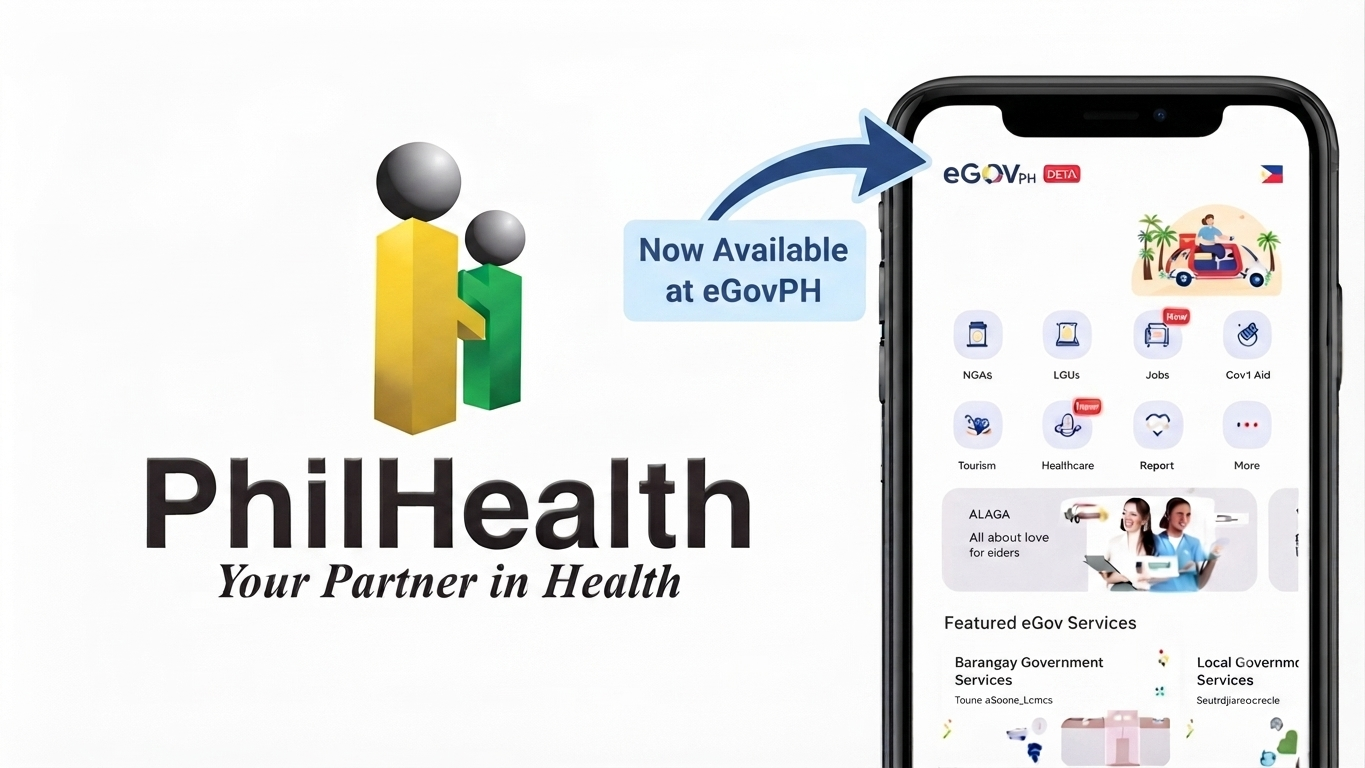
✅ Now on eGovPH: Manage your PhilHealth — contributions, records, YAKAP clinic finder, and payments — all from the eGovPH Super App. No branch visit needed. Available on iOS and Android.
Under the Universal Health Care Act (RA 11223), every Filipino citizen is automatically enrolled in PhilHealth. Benefits span six major categories:
Each benefit type uses a case rate system: PhilHealth pays a fixed peso amount for each covered condition, deducted directly from your hospital bill before discharge. You only pay whatever remains — the co-pay.
Who is covered under your membership: Your benefits extend to qualified dependents — your legal spouse, unmarried children under 21, children of any age with a permanent disability, and parents aged 60 and above who are not PhilHealth members themselves. Dependents must be declared in your Member Data Record (MDR) before they can use any benefit. OFWs: your dependents back home are covered under your contributions — they do not need a separate membership.
The premium rate has reached its final level under RA 11223. There is no hike for 2026 — 5% is the ceiling, confirmed by the Philippine Information Agency and PhilHealth Circular No. 2026-0001.
Who pays nothing: Senior citizens (60+), Persons with Disability (PWD), DSWD-identified indigents, and Lifetime Members have automatic government-subsidized coverage. No premium required, ever.
⚠️ Late payments carry interest: 1.5% per month for self-employed and land-based OFWs; 3% per month for employers, sea-based OFWs, and kasambahays. This compounds — even two missed months adds up fast.
Here are the most-used benefit packages with their 2026 rates. All amounts reflect the 50% case rate increase that took effect January 1, 2025, and the April 30, 2026 maternity expansion.
| Condition / Procedure | PhilHealth Pays | Notes |
|---|---|---|
| Pneumonia | ₱32,000 | Often covers 100% at Level 1–2 hospitals |
| Dengue Fever | ₱16,000 | Per confinement episode |
| Appendectomy | ₱24,000 | Open or laparoscopic |
| Normal Delivery | ₱29,000 | Tripled Apr 30, 2026 (was ₱9,750) |
| Cesarean Section | ₱58,000–₱62,000 | Tiered by hospital level (Level 1 vs. Level 2/3) |
| Dialysis (per session) | ₱2,600 | Up to 156 sessions/year (nearly tripled from prior limit) |
| Newborn Care Package | ₱4,425 | Screening, hearing test, essential vaccines |
| Cataract Surgery (with IOL) | Covered | Includes intraocular lens replacement |
| Kidney Transplant (Z-Benefit) | Up to ₱600,000 | Requires pre-authorization at Z-contracted facility |
| Cancer (Z-Benefit) | ₱100,000+ | Varies by type and stage; ask oncologist at diagnosis |
| TB Treatment (DOTS Package) | ₱4,000 | Full treatment course covered |
| Dental (YAKAP, public clinic) | Free | No co-pay at public dental clinics |
| Dental (YAKAP, private clinic) | Up to ₱1,000/yr | Preventive oral health only |
⚠️ Eligibility requirements: Inpatient benefits require at least 9 monthly contributions within the last 12 months before confinement. For maternity, the threshold is 3 months within the 12 months before delivery.
YAKAP — Yaman ng Kalusugan Program — replaced the old Konsulta package in July 2025. If you were enrolled in Konsulta, you were transitioned automatically. If you were never enrolled in either, you are leaving the most accessible PhilHealth benefit entirely on the table.
YAKAP is built on four components. Together, they function like a full primary care HMO — at zero additional cost beyond your regular contributions.
Important 2026 caveat: Per PhilHealth Advisory 2026-0007, only 21 of the 75 medicines are guaranteed to be in stock at every accredited clinic nationwide. The other 54 are on the list but depend on individual clinic stock. Call your clinic ahead of any visit to confirm availability of your specific medicines.
Enrollment is done in person at your chosen clinic — there is no purely online option. Bring your PhilHealth ID (or PIN) and a valid government ID. The clinic will conduct a First Patient Encounter (FPE): a physical exam, health history review, and any baseline labs your doctor orders. You then sign the YAKAP Empanelment Slip (YES), officially linking you to that provider.
For medicines, your doctor issues a prescription with a Unique Prescription Security Code (UPSC) via the GAMOT App. Bring it to any GAMOT-accredited pharmacy and it is dispensed at zero cost, deducted from your ₱20,000 annual credit. Your empanelment is tied to that clinic for one full year — choose based on proximity and confirmed medicine availability before you commit.
Important Note: Being on the accredited provider list and actively accepting new patients are two different things — always call first. The ₱20,000 GAMOT credit is per member per year, not per family; dependents each get their own separate ₱20,000 limit (but must be declared in your MDR first). The GAMOT pharmacy network is still expanding — access outside Metro Manila and Cebu can be uneven as of mid-2026.
PhilHealth pays the same fixed case rate no matter which hospital you go to. At a Level 1 or Level 2 hospital, that rate can cover 100% of your bill. At a premium Level 3 hospital, it might cover only 20–40%. For dengue, pneumonia, or a routine procedure — go lower level and pay nothing out of pocket.
PhilHealth's Case Rates Search Tool tells you exactly what's covered for your procedure — before you sign anything. Most Filipinos find out at discharge. Look it up first, compare hospitals, and ask for the PhilHealth Insurance Officer (not the billing clerk) to confirm your coverage on arrival.
Z-Benefits cover catastrophic illness — cancer, end-stage kidney disease, and more — and can pay out over ₱1 million per case. But you need pre-authorization before treatment starts. Ask your specialist on day one. Patients who find out mid-treatment often can't claim retroactively.
Most mothers only claim the delivery case rate. But a full 2026 maternity claim stacks: delivery (₱29,000–₱62,000) + newborn package (₱4,425) + 8 prenatal visits with bundled labs + 3 postnatal follow-ups. At a public hospital, that adds up to zero out-of-pocket for the entire pregnancy.
Your payslip shows a deduction. That does not mean it was remitted. Log into the PhilHealth Member Portal monthly and check "Posted Contributions." A missing month can make you ineligible at admission. If contributions aren't posted, demand written proof from HR — they are legally required to provide it.
Emergency situations don't always allow you to choose an accredited hospital. PhilHealth allows reimbursement claims for non-accredited facilities — but only if you file within 60 days of discharge. Bring your official hospital receipts, discharge summary, and filled-out PhilHealth Claim Form 1 (CF1) to any PhilHealth branch or LHIO. Miss the 60-day window and the claim is permanently forfeited — there are no extensions.
The eGovPH Super App is the most practical tool for land-based OFWs managing PhilHealth from abroad. It lets you pay contributions, generate payment references, update your MDR, locate YAKAP clinics for dependents back home, and track posted contributions — all without needing to contact a branch or rely on a representative. Download it on iOS or Android, log in with your PhilHealth PIN, and link your GCash or Maya for seamless payment. Most OFWs are still paying through remittance centers and overpaying on fees unnecessarily.
The April 30, 2026 maternity expansion changes the math significantly. Normal delivery is now covered at ₱29,000 — enough for zero out-of-pocket at most public hospitals and birthing homes. But the real move is stacking all components: delivery case rate + newborn package (₱4,425) + 8 prenatal visits with bundled labs + 3 postnatal follow-ups. File all of them with a single YAKAP or accredited OB provider and your entire pregnancy costs nothing.
What PhilHealth does not cover (the "hidden gaps"): routine dental outside YAKAP, private room upgrade costs, personal items (TV rental, guest meals, baby formula upgrades), and any procedure at a non-accredited facility unless you file for reimbursement within 60 days of discharge.
Accepted payment channels:
To get the most out of your coverage this year, do these five things:
-
1
Verify your Posted Contributions on the Member Portal Go to philhealth.gov.ph → Member Inquiry. Check that every month of your contributions is showing as "Posted." If any month is missing and you have payslip deductions, escalate to HR immediately — they are legally required to provide proof of remittance.
-
2
Enroll in a YAKAP clinic — today, not when you're sick Use the PhilHealth YAKAP page at philhealth.gov.ph or the eGovPH Super App to find an accredited clinic near you. Call first to confirm they are accepting new patients. Bring your PhilHealth ID and a valid government ID — enrollment is done in person and takes one visit.
-
3
Update your Member Data Record (MDR) and declare your dependents Log into the portal and confirm your spouse, unmarried children under 21, PWD children, and parents over 60 are listed and active. Undeclared dependents will be denied benefits at admission — no exceptions, no on-the-spot fixes.
-
4
Look up your Case Rate before any elective procedure Use PhilHealth's Case Rates Search Tool at philhealth.gov.ph to know the exact peso amount covered. Use it to compare facilities and avoid surprise co-pays — check before you book, not at discharge.
-
5
If diagnosed with a catastrophic illness, ask about Z-Benefits at day one Z-Benefits require pre-authorization before treatment begins and can cover over ₱1 million for cancer, end-stage kidney disease, and other severe conditions. Ask your specialist at diagnosis — patients who find out mid-treatment often cannot claim retroactively.
Read next
SSS: Your 2026 Social Security System Guide
PhilHealth covers hospital bills — SSS covers everything else. Here's the complete guide to your benefits.
Read the guide