
REITs in the Philippines: Own Real Estate for ₱5,000 (2026 Guide)
You can't buy a Greenbelt office tower. But you can own a piece of one through the stock market—and collect quarterly rent cheques—for less than the price of a dinner out.
Updated on Jun 28, 2026 · 15 min read
Fact Checked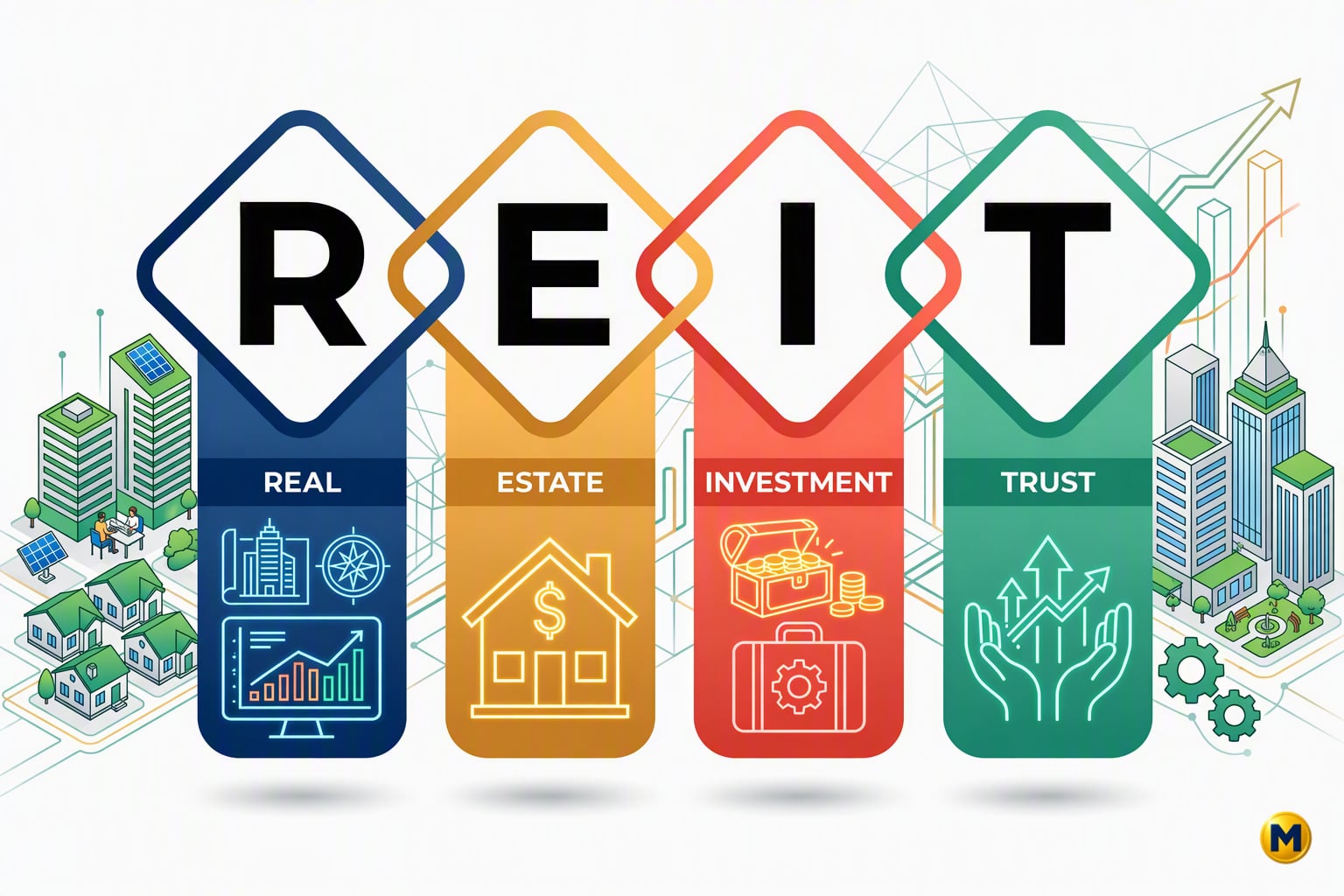
Quick answer
Philippine REITs are listed companies that own income-generating real estate and are required by law to distribute at least 90% of distributable income as dividends. They let you earn rental-style income with a few thousand pesos through any stockbroker, instead of buying property. Dividends are subject to withholding tax for most individual investors, and prices move with occupancy, interest rates, and tenant mix.
Key takeaways
- REITs must distribute at least 90% of distributable income under the Philippine REIT Act (RA 9856).
- REIT shares trade on the PSE like ordinary stocks, so entry cost is low and liquidity is daily.
- Cash dividends to resident individuals are generally subject to 10% final withholding tax.
- Yield alone is misleading: check occupancy, lease expiry profile, tenant concentration, and sponsor quality.
- Rising interest rates typically pressure REIT prices because bonds become relatively more attractive.
This guide covers all seven PSE-listed REITs ranked and compared, a full breakdown of every fee you'll pay, a dividend calculator built on verified historical data, and a step-by-step buying guide. Everything you need to make your first REIT investment.
What Exactly Is a Philippine REIT?
A Real Estate Investment Trust (REIT) is a publicly listed company whose core business is owning and operating income-generating properties. Think of it as a pool: dozens of buildings go in, thousands of investors buy in, and the rental income flows out as regular dividends.
In the Philippines, REITs are governed by Republic Act 9856 (REIT Act of 2009). The one rule every investor must know: a REIT must distribute at least 90% of its distributable income as dividends annually. Because of this, REITs retain almost nothing for internal growth — they expand by issuing new shares or taking on debt, not by hoarding profits. That's why yields are high and capital appreciation is limited. A SEC circular in January 2026 expanded eligible asset types to include energy infrastructure, data centers, and toll roads — none are listed yet, but it opens the door.
How REITs Differ from Regular Stock Picking
Buying AREIT and buying SM Prime Holdings are both stock market transactions. You use the same broker, the same trading platform, the same PSE order book. But the two investments are fundamentally different animals.
| Factor | REIT | Ordinary Stock |
|---|---|---|
| What you own | Fraction of real buildings + rental income | Equity in a company's earnings and future |
| Dividends | Mandatory 90% payout by law | Board's discretion — can be cut anytime |
| How to value it | Yield, FFO, occupancy rate | P/E, revenue growth, margins |
| Price drivers | Interest rates, vacancies, lease terms | Earnings growth, macro, sentiment |
| Sponsor risk | High — sponsor sets asset injection prices | Standard governance risk |
| Capital growth | Lower — most income paid out | Higher — earnings can compound internally |
The mental model shift: when you buy a regular stock, you are betting on a company's future earnings growth. When you buy a REIT, you are primarily investing in the present income stream of specific buildings. It is closer to being a landlord than to being a shareholder in the traditional sense.
The 7 Philippine REITs: A Ranked Guide
As of mid-2026, seven REITs trade on the PSE. Here is what you need to know about each one — beyond the headline yield figure.
The first REIT ever listed on the PSE and still the most trusted. AREIT's portfolio is anchored in Makati CBD — the exact micro-market where office vacancies are a tight 8–9%, unlike the struggling fringe zones. Its Greenbelt retail holdings benefit directly from the retail recovery: store openings in Philippine malls surged 34% in Q4 2025 while closures fell sharply. AREIT yields less than its peers on paper, but that lower yield reflects lower risk, not lower quality.
| Year | Annual Div/Share | Approx. Price Range | Div Trend |
|---|---|---|---|
| 2021 | ₱1.30 | ₱33–₱42 | ↑ Growing |
| 2022 | ₱1.93 | ₱29–₱39 | ↑ Growing |
| 2023 | ₱2.12 | ₱28–₱38 | ↑ Growing |
| 2024 | ₱2.25 | ₱28–₱40 | ↑ Growing |
| 2025 | ₱2.37 | ₱36–₱42 | ↑ Growing |
The retail recovery isn't a forecast anymore — it's documented. Store openings surged 34% in Q4 2025 while closures dropped over 60%, with F&B-led expansion driving foot traffic above pre-pandemic levels in many malls. VREIT is the purest beneficiary of this shift on the PSE. It also now carries the highest projected dividend yield of all seven REITs, and its annual payout has grown every year since listing (₱0.03 in 2022 to ₱0.13 in 2025). At a ~₱1.46 share price, it's the most accessible entry point in the REIT market.
| Year | Annual Div/Share | Approx. Price Range | Div Trend |
|---|---|---|---|
| 2021 | — | Listed Jul 2022 | — N/A |
| 2022 | ₱0.03 | ₱1.40–₱1.55 | — Partial yr |
| 2023 | ₱0.08 | ₱1.30–₱1.60 | ↑ Growing |
| 2024 | ₱0.11 | ₱1.35–₱1.65 | ↑ Growing |
| 2025 | ₱0.13 | ₱1.35–₱1.60 | ↑ Growing |
MREIT's township ecosystem model creates tenant stickiness — offices surrounded by retail, residential, and amenities make lease renewals more likely. The thesis holds structurally, and BPO confidence through 2026–2028 supports it. However, dividend data for 2024–2025 shows no confirmed declared payouts on record — a meaningful gap that warrants caution before buying. Existing holders have reason to stay; new investors should wait for the next dividend declaration to confirm the income stream is intact before committing fresh capital.
| Year | Annual Div/Share | Approx. Price Range | Div Trend |
|---|---|---|---|
| 2021 | Listed Oct 2021 | ₱16–₱18 | — Partial yr |
| 2022 | ₱0.97 | ₱13–₱18 | → Flat |
| 2023 | ₱0.98 | ₱12–₱15 | → Flat |
| 2024 | ₱0.99 | ₱12–₱15 | → Flat |
| 2025 | ₱1.00 | ₱13–₱15 | ↑ Slight uptick |
CREIT does not own buildings at all — it owns land leased on long-term contracts to renewable energy operators. Cash flows are almost entirely contract-driven, making dividends unusually stable and predictable. There is no office vacancy to worry about, no footfall to track, no BPO lease expiry. The risk here is contract counterparty quality and any regulatory shifts in the energy sector. For investors bored of office REITs, CREIT is the most distinctive name on the board.
| Year | Annual Div/Share | Approx. Price Range | Div Trend |
|---|---|---|---|
| 2021 | — | Listed Jan 2022 | — N/A |
| 2022 | ₱0.18 | ₱2.50–₱3.30 | — Partial yr |
| 2023 | ₱0.20 | ₱2.90–₱3.50 | ↑ Growing |
| 2024 | ₱0.20 | ₱3.00–₱3.60 | → Stable |
| 2025 | ₱0.20 | ₱3.10–₱3.60 | → Stable |
RCR is the most geographically diversified office REIT in the Philippines. Robinsons' properties spread across Metro Manila CBDs and key provincial cities, reducing the single-location concentration risk that some rivals carry. It is a natural portfolio complement to AREIT's Makati concentration. Dividend consistency has been solid, and the backing of JG Summit-aligned Robinsons Land provides institutional credibility.
| Year | Annual Div/Share | Approx. Price Range | Div Trend |
|---|---|---|---|
| 2021 | Listed Sep 2021 | ₱6.00–₱6.60 | — Partial yr |
| 2022 | ₱0.39 | ₱5.50–₱7.00 | → Stable |
| 2023 | ₱0.39 | ₱5.00–₱6.50 | → Stable |
| 2024 | ₱0.43 | ₱5.50–₱7.50 | ↑ Growing |
| 2025 | ₱0.44 | ₱5.50–₱7.00 | ↑ Growing |
DDMPR consistently posts the highest yield in the Philippine REIT market — but the market is pricing in risk, not generosity. Revenue has declined over the last three years and earnings per share has fallen significantly over the same period. The share price has held up better than underlying fundamentals, which is a cautionary signal. The DoubleDragon sponsor ecosystem is less established than Ayala or Megaworld. The yield is attractive; the risk is real.
| Year | Annual Div/Share | Approx. Price Range | Div Trend |
|---|---|---|---|
| 2021 | ₱0.09 | ₱1.80–₱2.60 | — Partial yr |
| 2022 | ₱0.10 | ₱1.50–₱2.10 | → Flat |
| 2023 | ₱0.10 | ₱1.10–₱1.70 | ↓ Flat/slip |
| 2024 | ₱0.10 | ₱1.00–₱1.40 | ↓ Declining |
| 2025 | ₱0.09 | ₱0.90–₱1.10 | ↓ Declining |
Filinvest REIT carries notable exposure to the Alabang corridor, which has been one of the harder-hit micro-markets in Metro Manila's office sector — vacancy in Alabang ran above 32% through 2025. The BPO-heavy tenant base is a double-edged sword: stable in normal times, vulnerable when the outsourcing cycle turns. Yield is competitive but investors should pressure-test the occupancy trajectory before committing a large position.
| Year | Annual Div/Share | Approx. Price Range | Div Trend |
|---|---|---|---|
| 2021 | ₱0.14 | ₱6.00–₱7.20 | — Partial yr |
| 2022 | ₱0.36 | ₱4.50–₱7.00 | ↑ Peak year |
| 2023 | ₱0.33 | ₱3.50–₱5.00 | ↓ Declining |
| 2024 | ₱0.23 | ₱2.80–₱4.00 | ↓ Declining |
| 2025 | ₱0.23 | ₱2.80–₱3.50 | → Stabilising? |
Dividend Income Calculator
Use the calculator below to estimate how much you could earn annually from a Philippine REIT investment. Adjust the yield to match any of the seven REITs listed above.
REIT Dividend Income Estimator
Estimates are indicative. Actual returns will vary with share price and REIT performance.
5-Year Projection — Growth Rate Applied
| Year | Portfolio Value | Yield This Year | Gross Dividend | Tax | Net Dividend | Cumulative Net |
|---|
The Hidden Costs of Buying REITs
Buying and selling a REIT costs exactly the same as buying and selling any ordinary PSE-listed stock. Where REITs differ is in what happens after you own them — two recurring costs that most stock investors rarely encounter.
How to Buy Philippine REITs: Step by Step
-
Open a PSE-accredited brokerage account
Any PSE-accredited online broker works — most offer fully digital account opening that takes 1–3 business days. Check our broker comparison guide to find the right one for you.
-
Fund your account
Via InstaPay or bank transfer. No mandated minimum — but note that REITs trade in board lots (minimum 100 shares per order). At AREIT's ~₱38/share that's ~₱3,800 minimum; at VREIT's ~₱1.46 it's ~₱146. Budget accordingly.
-
Research your REIT
Check the PSE disclosure page for the latest dividend announcements, occupancy rates, and annual reports before placing any order.
-
Place a limit order
Search the ticker (e.g. AREIT), set your price, and confirm. Limit orders are smarter than market orders for REITs — they're less liquid than blue-chip stocks.
-
Collect dividends — then reinvest
Dividends land in your brokerage account net of 10% withholding tax. Reinvesting them into more shares is how compounding starts working for you.
Insider Tips & Common Mistakes to Avoid
Common Questions
Do I pay capital gains tax when I sell REIT shares for a profit?
How do I track my REIT after buying?
Is a REIT better than putting money in a high-yield digital savings account?
What happens to my investment if the REIT's sponsor goes bankrupt?
Ready to buy REITs?
Check out one of our most popular guides so far — choosing the right broker for you.
Read next
Retail Treasury Bonds (RTB) PH 2026 Guide
Want something steadier than REITs? RTBs pay fixed interest backed by the government — here's how to buy.
Read the guide