
Term vs. VUL: Which Life Insurance Fits You?
A decision framework, not a sales pitch for either one — what each product is actually built for, what it really costs, and a straight way to pick.
Updated on 08/31/2026 · 11 min read
Quick answer
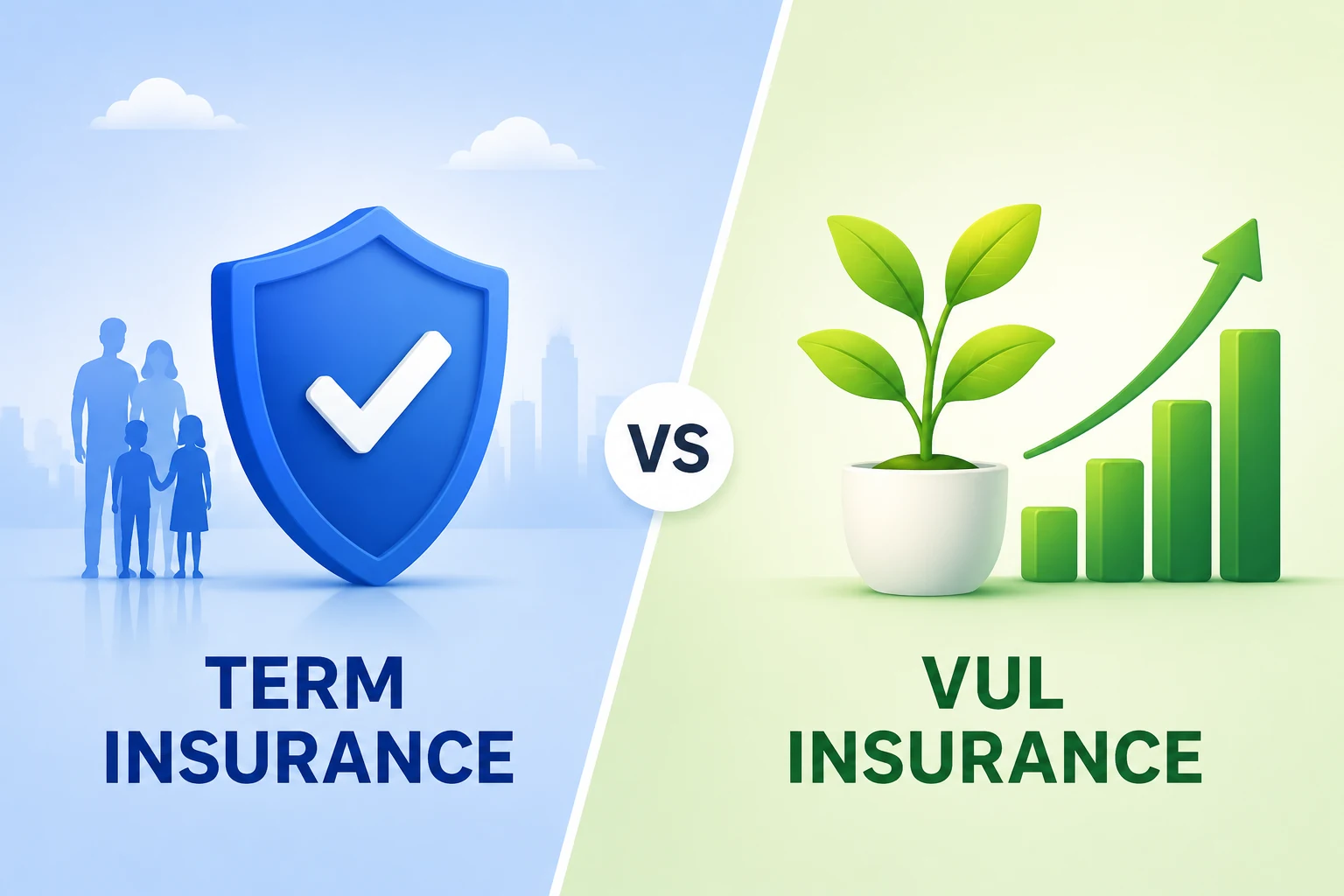
Term insurance buys pure protection for a fixed period at the lowest cost per peso of coverage; a VUL bundles life insurance with an investment fund in one contract. For most Filipinos who mainly need income replacement, term insurance plus a separate investment (index fund, MP2, or bonds) gives more coverage and clearer costs. A VUL suits people who will not invest consistently on their own and value one automatic arrangement.
Key takeaways
- Term premiums buy a much larger death benefit than the same premium in a VUL.
- VUL charges (premium, administration, and insurance charges) reduce the amount actually invested, especially in early years.
- VUL fund values are not guaranteed; they rise and fall with the underlying funds.
- Buy-term-and-invest-the-difference works only if the difference is genuinely invested every month.
- Coverage need is usually estimated as several years of income plus outstanding debts, less existing assets.
Every Filipino who's ever talked to an insurance agent has heard some version of the same pitch: "Bakit babayaran mo lang ang term, wala kang makukuha? Sa VUL, may investment ka pa." It sounds like a free upgrade. It isn't — you're paying for that "extra" investment component, and the fees for bundling it in are rarely explained clearly at the point of sale.
This guide isn't here to tell you VUL is bad or term is always right. It's here to give you the actual framework agents skip: what each product is built for, what it really costs, and a straight way to decide which one fits your specific situation.
The Core Difference, in Plain Terms
Term and VUL are not two versions of the same product. They're built for different jobs, and most of the confusion in this comparison comes from evaluating them as if they were competing on the same metric.
Term Life Insurance
VUL (Variable Universal Life)
The Numbers: Illustrative Cost Comparison
For the same face amount, term insurance is dramatically cheaper than VUL — because you're only paying for mortality risk, not mortality risk plus fund management plus distribution costs. Here's a rough, illustrative picture for a healthy 30-year-old non-smoker seeking ₱1,000,000 in coverage:
| Product | Coverage | Approx. Annual Cost |
|---|---|---|
| 20-year term | ₱1,000,000 | ₱8,000–12,000 |
| VUL (regular pay, min. face amount) | ₱1,000,000 | ₱40,000–60,000+ |
These are illustrative ranges, not quotes — actual premiums depend on the insurer, your age, health class, gender, and the specific product's minimum face amount and charge schedule. Always request a formal quote for your exact profile. The point isn't the exact peso figure; it's the order of magnitude: for pure protection, VUL typically costs 4–6x more than term for the same death benefit, because a large share of that extra premium is funding the investment side and its associated charges, not additional coverage.
Stretched over 20 years, the gap compounds rather than shrinks. Here's an illustrative picture of ₱36,000/year invested directly (term + invest) versus a VUL fund value net of charges, for the same starting premium budget:
Illustrative only, not a projection or quote — actual figures depend on your insurer's charge schedule and the fund's real returns. The shape is the point: VUL's early years are dragged down by front-loaded charges, and the gap doesn't fully close even by year 20 under typical fee structures.
Where Your Money Actually Goes
The clearest way to see the difference is to trace a single premium payment through each product.
This is the mechanic behind most "is my VUL a scam" confusion online — it's structural, not unique to any one insurer.
The "Term + Invest the Difference" Math
This is the comparison most VUL pitches don't invite you to make. If VUL costs roughly ₱45,000/year and term for the same coverage costs roughly ₱9,000/year, the ₱36,000 difference doesn't have to disappear — it can be invested directly in a UITF, mutual fund, or index fund, where you see the fee structure clearly and keep full control of where it's invested.
Decision Framework: Which One Fits You
Strip away the sales language and the decision usually comes down to three questions: what's your actual goal, how long is your horizon, and how disciplined are you about investing money you haven't been billed for.
How to Actually Decide: A 6-Step Process
Instead of deciding based on a single conversation with one agent, work through this in order:
Add up outstanding debts, years of income your dependents would need replaced, and future costs like education. This number should drive your face amount — not what an agent's illustration defaults to.
This becomes your baseline cost for pure protection — the number every VUL proposal should be measured against.
Ask specifically for the charges table — premium charge schedule, cost of insurance basis, fund management fee, and surrender charge schedule — not just the projected fund value chart.
If you've held a UITF, mutual fund, or MP2 account for over a year with consistent monthly contributions, you likely have the discipline for term + invest separately. If you've started and stopped a savings habit multiple times, VUL's forced billing has real value for you. Not sure which camp you're in? Our Risk Appetite Quiz takes two minutes and gives you a starting point.
If there's a real chance you'll need this money back within 5–10 years, VUL's surrender charges make it a poor fit regardless of your discipline. Term's low cost keeps your budget flexible for near-term goals.
Stop paying term and the policy simply lapses after the grace period — you get nothing back, but you were never owed anything back; you were only ever paying for protection already used. Stop paying VUL and it's less clean: the insurer may auto-deduct charges from your fund value to keep the policy alive until it runs out, or you can formally surrender and get back the cash value minus any remaining surrender charge — which, in the early years, can be meaningfully less than what you paid in. Neither product rewards a change of mind partway through, which is exactly why this decision is worth the extra week, not the first agent meeting.
Honest Advice: The Move Most People Should Actually Make
Get a term insurance quote this week for the coverage amount you actually need — it takes minutes and costs nothing. Compare that number against any VUL premium you've been quoted for the same face amount. The gap between them is the real, concrete cost of the bundling, in pesos you can see. Decide from that number, not from a growth projection.
This article is independent editorial content produced by MoneyHub PH. We do not accept payment from insurers or agents to be featured, and no links in this guide are paid placements. Cost figures presented as "illustrative" are simplified examples for comparison purposes, not quotes — always request a formal quote for your exact profile. This article is for general information and isn't personalized financial or insurance advice.
Frequently asked questions
Is term insurance or VUL better for a young Filipino professional?
If the goal is protecting dependants at the lowest cost, term insurance wins on coverage per peso. A VUL becomes reasonable when you want protection and investing handled together and know you would otherwise skip investing.
Can I cancel a VUL and get my money back?
You can surrender it, but early surrender usually returns far less than you paid because charges are front-loaded and a surrender charge may apply in the first years. Read the policy's illustration table before deciding.
What happens when a term policy expires?
Coverage simply ends and there is no cash value. Some policies are renewable or convertible, typically at a higher premium reflecting your age at renewal.
How much life insurance do I need?
A common starting point is five to ten times annual income, adjusted for outstanding loans, children's education, and any existing savings or employer coverage.
Read next
Is VUL Worth It? Variable Life Insurance PH 2026
Still deciding? This deep dive shows exactly when a VUL makes sense — and when it's an expensive mistake.
Read the guide